

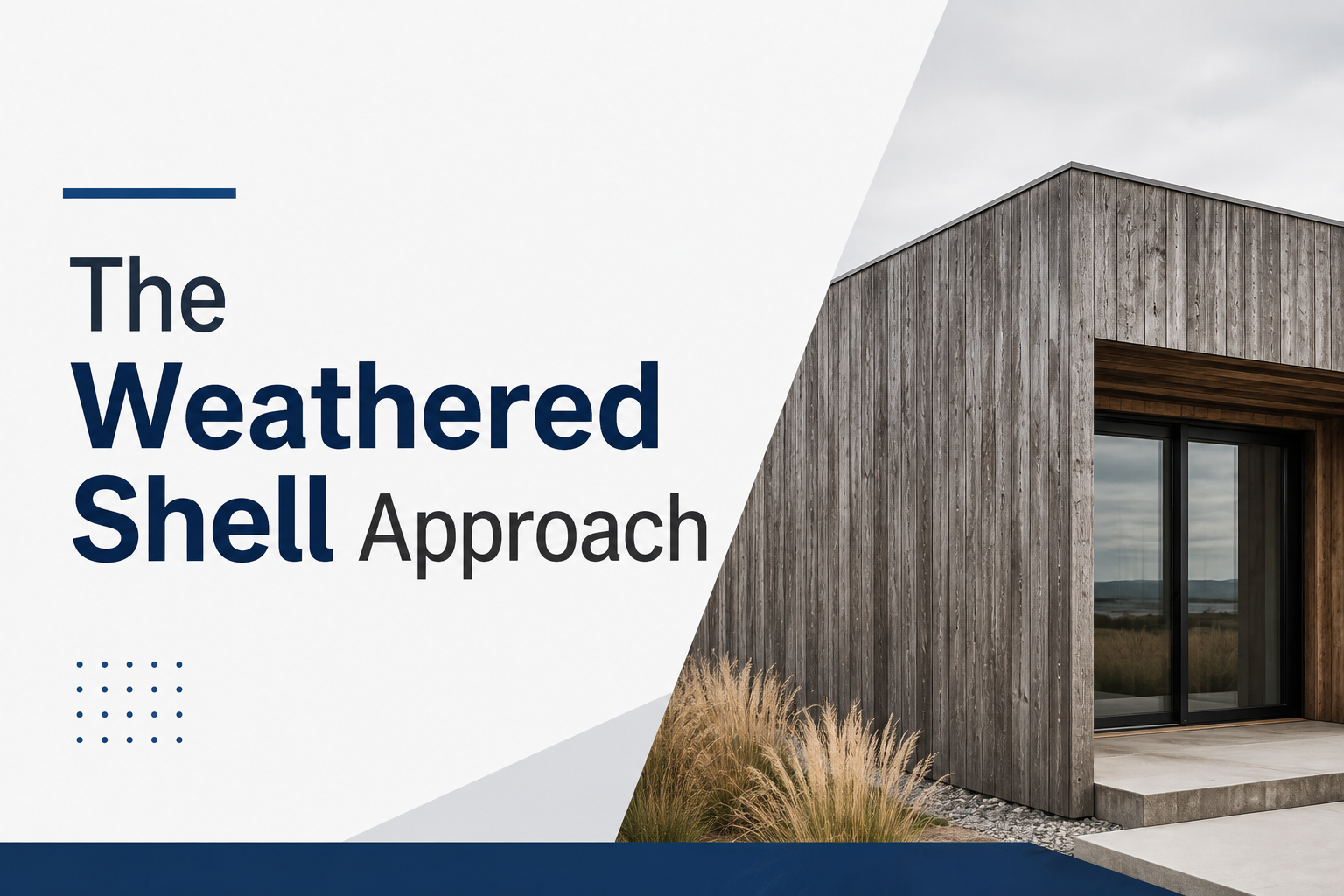
Most homeowners assume a remodel or addition has to happen all at once — tear it open, finish it, move on. However, that’s not actually how a lot of successful projects get built. A growing number of contractors (including us) and homeowners are turning to what’s sometimes called the “weathered shell” approach. We get the structure buttoned up first; it is framed, roofed, wrapped, and weather-tight. Then finish the interior in stages as money, time, and priorities allow. Here is all you need to know about this approach:
What a Weathered Shell Actually Means
The idea borrows from commercial construction, where developers routinely build a “shell”, which includes the foundation, structural frame, roof, and exterior envelope, long before anyone decides what goes inside.
Shell construction typically lowers initial costs by postponing interior finishes and tenant-specific systems, which helps reduce upfront investment and speeds up project delivery. When you apply that same logic to a house, you get a weathered shell, which is basically an addition or renovated space that’s fully protected from the elements. The walls are up, roof is on, and windows in. However, drywall, flooring, cabinetry, and fixtures are still to come.
Once a space is weathered in, there’s no urgency. The framing isn’t exposed to rain. Nothing is going to warp or rot while you wait on a budget to catch up. That’s the whole point of it. You’ve locked in the hard part, and everything after that is finish work you can schedule on your own terms.
Why Homeowners Are Doing This Now
Construction costs haven’t been kind to remodeling budgets. The median remodeling spend jumped 60% between 2020 and 2023, climbing from roughly $15,000 to $24,000, and more than half of renovators spent $25,000 or more on a single project last year. That kind of jump has pushed a lot of people to stop thinking of a remodel as one big expense and start treating it as a sequence of smaller ones.
Phasing gives you room to breathe financially. It lets you spread costs out to match savings, bonuses, or home equity growth instead of financing the whole project at once.
The Planning Timeline Matters More Than People Expect
Here’s something that surprises a lot of homeowners we come across-planning a remodel often takes longer than building it. A kitchen remodel, for instance, can spend nearly 9.6 months in the planning stage compared to just 5.1 months of actual construction. This gap is exactly why a phased approach works so well. You get the shell locked in during that long planning window, then make finish decisions on each phase as it comes up.
You Don’t Have to Move Out
One of the biggest benefits of phasing is that it lets you keep living in your home. You pay for one phase at a time, adjust based on cash flow, and avoid turning your whole house into a construction zone at once. Instead of demo happening in every room simultaneously, you’re dealing with one contained zone while the rest of the house stays livable. For a lot of families, that alone makes phasing worth it because nobody wants to be cooking on a hot plate in the garage for eight months.
Having said that, there is one thing that we need to keep in mind. Staying in the home while phasing a build can stretch the overall schedule. A project might take nine months if you move out entirely, but twelve to fourteen months if you’re living through it in stages. That’s a fair trade for most people: a longer calendar in exchange for not uprooting the household.
Where This Approach Works Best
This is a strategy we lean on most for the bigger remodeling jobs, which include home additions, second-story additions, basement finishes, and full home remodels where separating “get it enclosed” from “finish it out” makes a real difference. It matters less on a contained project like a single bath remodel or a space reconfiguration, where the scope is already small enough that phasing doesn’t buy you much.
In case you are planning an addition for a growing family, converting an unfinished basement into real living space, or building out a second story, locking in the shell now and finishing rooms over the next year or two can turn a project that felt out of reach into something that’s actually doable, without waiting years to save up the full amount first.
The Bottom Line
The weathered shell approach isn’t a shortcut or a compromise. It’s a legitimate building strategy that recognizes most people don’t have their entire renovation budget sitting in a bank account on day one. Get the structure built and protected, then finish it room by room as life allows. If you’re weighing whether to wait on a project entirely or find a way to start now, this is often the answer that lets you do both.
Ready to start your project without waiting years to save up the full budget? Call AY Building and Remodeling at (203) 410-8255 to talk through your Weathered Shell options.


No comment